-
Study Publication: Collaborative Research with University of Padova on High-Payload ADCs using NOF’s Pendant-type PEG Linkers
Tokyo, Japan — NOF CORPORATION is pleased to announce the publication of collaborative ADC research demonstrating the potential of hydrophilic pendant-type monodisperse PEG linkers to improve the performance of high-payload antibody-drug conjugates (ADCs). The paper was published in the International Journal of Biological Macromolecules and was co-authored with researchers from the University of Padova.
The published paper, titled “High-payload trastuzumab–drug conjugates achieved through hydrophilic pendant-type PEG linkers for a potent and selective antitumor response,” was led by Professor Gianfranco Pasut of the University of Padova, Italy, with researchers from NOF CORPORATION participating as co-authors.
High-Payload ADC Research Design
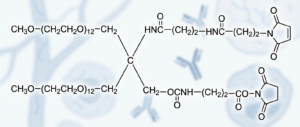
This ADC research evaluated NOF pendant-type PEG linkers (“X”-shaped, an advanced form of Y-shaped PEG linkers) in trastuzumab-drug conjugates to determine whether hydrophilic PEG linker design could improve the developability of high-payload ADCs. The study specifically addressed DAR8 antibody-drug conjugates, where increased hydrophobicity can reduce stability, impair pharmacokinetics, and limit effective tumor delivery.Using this model system, the research examined how pendant-type monodisperse PEG linkers could help maintain favorable physicochemical properties while supporting potent and selective antitumor activity. The findings showed that hydrophilic pendant-type PEG linker technology can be a useful strategy for high-payload ADC design.
PEG Linker Performance in High-Payload ADCs
NOF pendant-type PEG linkers improved PEG linker performance in high-payload ADCs by reducing hydrophobicity in DAR8 constructs and supporting more favorable ADC properties. Among the hydrophilic PEG linkers evaluated in the study, PEG12 was identified as the optimal lead candidate for high-payload antibody-drug conjugate design.
- Prolonged pharmacokinetic profile
- Excellent tumor accumulation
- Near-complete tumor regression in vivo
These findings suggest that hydrophilic PEG linker design may help overcome a major limitation in the development of potent, high-payload ADC therapeutics. The results also support the use of monodisperse PEG linker strategies to improve ADC stability, exposure, and antitumor performance.
Why Hydrophilic PEG Linkers Matter for ADC Development
Hydrophilic PEG linkers matter for ADC development because PEG linker design directly influences payload loading, solubility, stability, systemic exposure, and tumor selectivity in antibody-drug conjugates. For high-payload ADCs, improving hydrophilicity is an important strategy for addressing the performance limitations often caused by excess hydrophobicity.
In ADC development, linker design plays a critical role in balancing payload loading, stability, systemic exposure, and tumor selectivity. The findings from this study highlight the value of NOF’s pendant-type PEG linker technology as a promising approach for improving ADC performance and enabling more potent and selective therapeutic design.
ADC Publication Details
This published ADC study appeared in the International Journal of Biological Macromolecules and reports research on hydrophilic pendant-type PEG linkers for high-payload antibody-drug conjugates. Readers looking for the original publication can access the journal information and DOI below.
Journal: International Journal of Biological Macromolecules
Volume: 343, Part 2
Publication date: February 2026
Article number: 150375
DOI: https://doi.org/10.1016/j.ijbiomac.2026.150375Related Sources for PEG Linkers and ADC Research
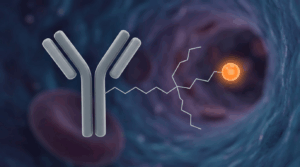
Explore related NOF resources on monodisperse PEG technology and PEG linker solutions relevant to ADC research and bioconjugation development. These sources provide additional information on product platforms and PEG linker options connected to the technology described in this published research.
See Also
For additional product discovery and technical inquiries related to PEG linkers, ADC development, and monodisperse PEG technologies, use the resources below. These links help visitors continue to relevant product search tools and direct contact options.
- Product Search by Characteristic
* Search window only supports product codes. Please make use of the check boxes for filtering. - Contact Us
* Please select “Life Science” for the Business Division field.
